


[Lecture Report] The 3rd Meeting of the FY2025 “Roundtable on Geothermal Heat, a Renewable Energy Source: The Role of Geothermal Heat in Medical Facilities” (Ministry of the Environment, November 26, 2025, Chuo City, Tokyo)
date : 11/30/2025
Tags: Planetary Health

![[Lecture Report] The 3rd Meeting of the FY2025 “Roundtable on Geothermal Heat, a Renewable Energy Source: The Role of Geothermal Heat in Medical Facilities” (Ministry of the Environment, November 26, 2025, Chuo City, Tokyo)](https://hgpi.org/en/wp-content/uploads/sites/2/eyecatch_suzuki.png)
On November 26, 2025, Mr. Shu Suzuki, Senior Associate of Health and Global Policy Institute (HGPI), participated as a panelist in the 3rd meeting of the FY2025 “Roundtable on Geothermal Heat, a Renewable Energy Source,” hosted by the Ministry of the Environment (MoE). The session, titled “The Role of Geothermal Heat in Medical Facilities,” focused on the potential for decarbonization and management improvement in the healthcare sector.
What is Geothermal Heat? A Clean Energy Source Beneath Our Feet
Geothermal heat (ground source heat) is a form of renewable thermal energy available right beneath us. At a depth of approximately 10 meters, the ground temperature remains constant year-round—cooler than the air in summer and warmer in winter. By utilizing this temperature difference, highly efficient heating and cooling can be achieved, contributing to energy savings, decarbonization, and the mitigation of the heat island effect. While “geothermal energy” typically refers to high-temperature heat from deep within the Earth used for power generation, “geothermal heat” refers to the relatively low-temperature heat (10–20°C) found at shallower depths (10 to several hundred meters), primarily derived from solar energy. Common application methods include Ground Source Heat Pump (GSHP) systems, such as “closed-loop” systems using underground heat exchange pipes and “open-loop” systems that directly utilize groundwater.
Significance and Challenges in Medical Facilities
Since FY2024, the MoE has been organizing this roundtable to promote the adoption of geothermal heat across various sectors. This third meeting specifically addressed medical facilities, which are characterized by high energy consumption. In a hospital setting, implementing high-efficiency geothermal systems is expected to not only reduce running costs but also provide a stable and comfortable indoor environment for patients.
During the panel discussion, Mr. Suzuki highlighted several key points from a healthcare policy perspective:
- Balancing Management and Decarbonization: The importance of cost reduction in hospital management and the creation of sustainable business models through renewable energy.
- Enhancing the Care Environment: How stable and efficient climate control impacts patient comfort and health outcomes.
- Barriers to Adoption: The necessity of public support and the sharing of best practices to address challenges such as high initial investment costs.
For more details, please visit FY2025 “Roundtable on Geothermal Heat, a Renewable Energy Source” | Ministry of the Environment (in Japanese). HGPI will continue to promote policy recommendations for sustainable healthcare systems through the lens of Planetary Health, where health and environmental issues intersect.
Related Posts
-

2023-08-01
[Announcement] HGPI Joins Global Green and Healthy Hospitals (August 1, 2023)
-
2024-06-26
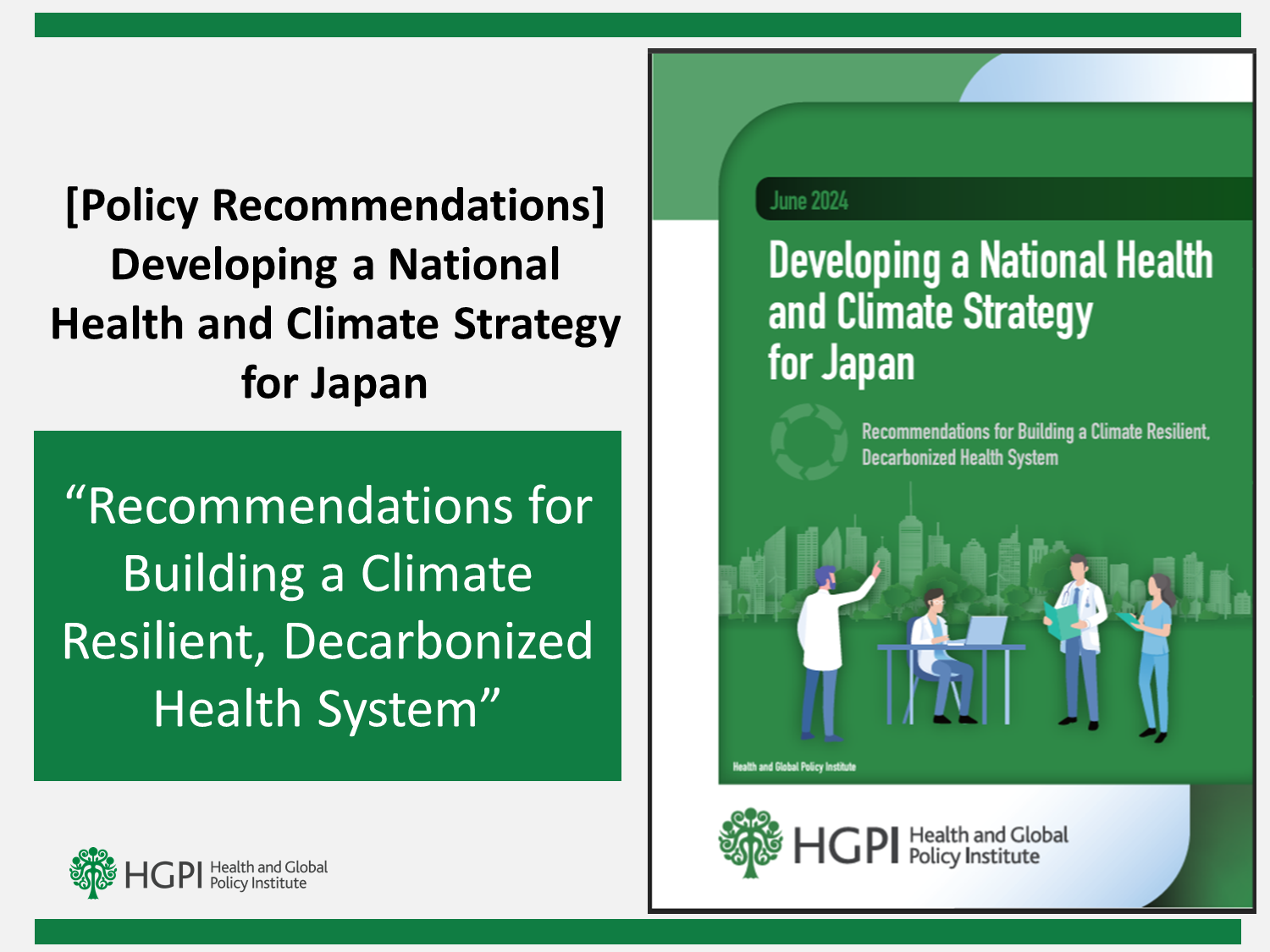
[Policy Recommendations] Developing a National Health and Climate Strategy for Japan (June 26, 2024)
-
2025-11-11
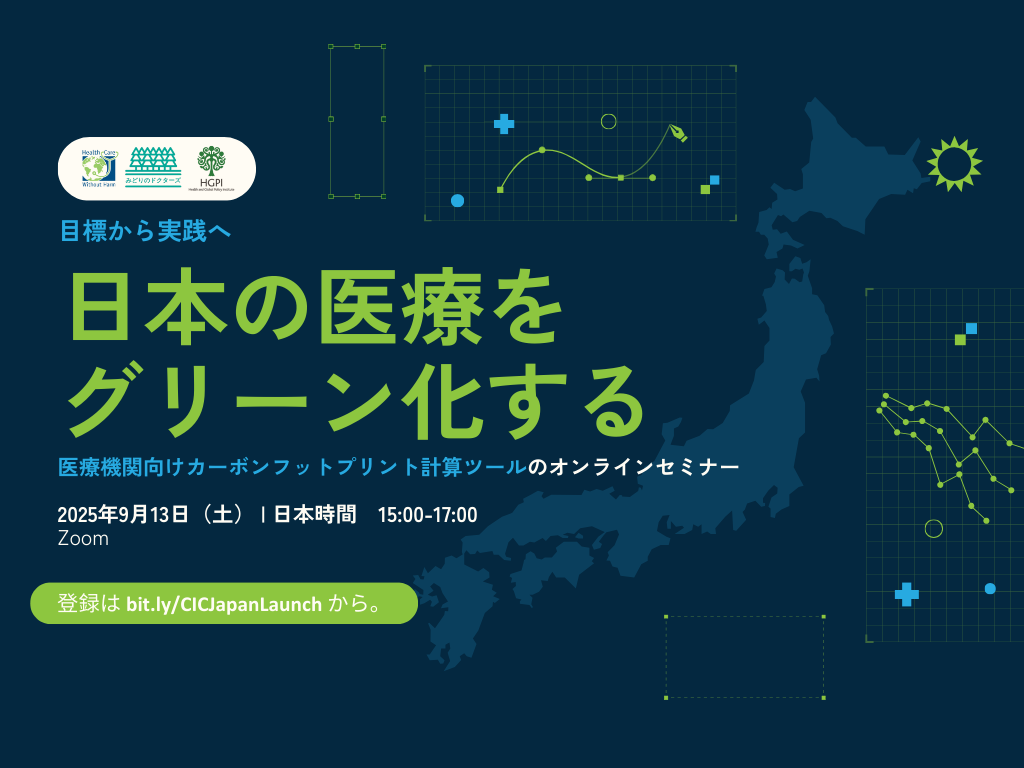
[Event Report] From Vision to Action: Greening Japan’s Healthcare “Online Seminar: Climate and Health 101” (September 13, 2025)
-
2025-11-17
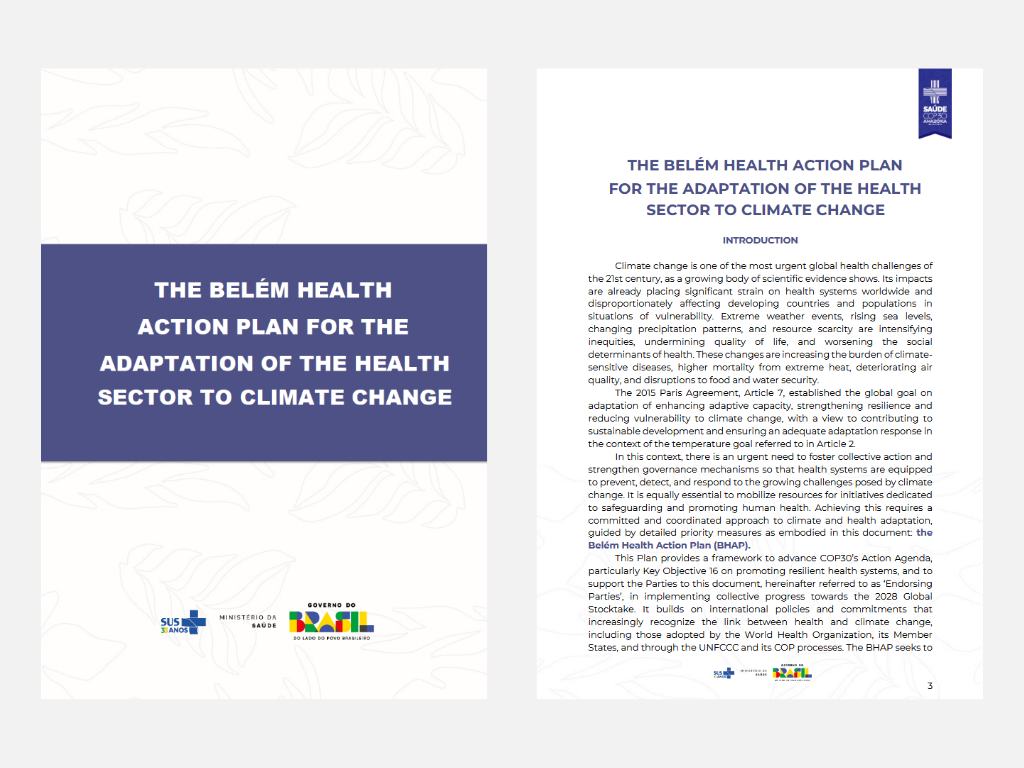
[Announcement] HGPI Endorses the “Belém Health Action Plan” (November 14, 2025)
Top Research & Recommendations Posts
- [Research Report] Energy Conservation and Greenhouse Gas Emissions Reduction in Healthcare Facilities: Case Studies from New Construction and Facility Renewal (March 16, 2026)
- [Public Comment Submission] “The 7th Science, Technology and Innovation Basic Plan” (Draft) (February 19, 2026)
- [Research Report] Perceptions, Knowledge, Actions and Perspectives of Healthcare Organizations in Japan in Relation to Climate Change and Health: A Cross-Sectional Study (November 13, 2025)
- [Research Report] The 2026 Public Opinion Survey on Healthcare in Japan (February 13, 2026)
- [Research Report] The 2025 Public Opinion Survey on Healthcare in Japan (March 17, 2025)
- [Research Report] The 2023 Public Opinion Survey on Satisfaction in Healthcare in Japan and Healthcare Applications of Generative AI (January 11, 2024)
- [Policy Recommendations] Reshaping Japan’s Immunization Policy for Life Course Coverage and Vaccine Equity: Challenges and Prospects for an Era of Prevention and Health Promotion (April 25, 2025)
- [Research Report] The Public Opinion Survey on Child-Rearing in Modern Japan (Final Report) (March 4, 2022)
- [Policy Recommendations] Mental Health Project: Recommendations on Three Issues in the Area of Mental Health (July 4, 2025)
- [Policy Recommendations] The Path to a Sustainable Healthcare System: Three Key Objectives for Public Deliberation (January 22, 2026)
Featured Posts
-
2026-02-13
[Research Report] The 2026 Public Opinion Survey on Healthcare in Japan (February 13, 2026)
![[Research Report] The 2026 Public Opinion Survey on Healthcare in Japan (February 13, 2026)](https://hgpi.org/en/wp-content/uploads/sites/2/HGPI_The2026PublicOpinionSurveyOnHealthcareInJapan_20260213.jpg)
-
2026-03-03
[Registration Open] Online Seminar “Implementing Chronic Kidney Disease (CKD) Measures into Society: Towards a Data-Driven Health System” (April 21, 2026)
![[Registration Open] Online Seminar “Implementing Chronic Kidney Disease (CKD) Measures into Society: Towards a Data-Driven Health System” (April 21, 2026)](https://hgpi.org/en/wp-content/uploads/sites/2/HGPI_20260421_CKDonlineseminar-.png)
-
2026-03-23
[Registration Open] (Hybrid Format) Kick-off Symposium: Rethinking Social Investment in “Brain Health” (April 6, 2026)
![[Registration Open] (Hybrid Format) Kick-off Symposium: Rethinking Social Investment in “Brain Health” (April 6, 2026)](https://hgpi.org/en/wp-content/uploads/sites/2/HGPI_Event_02060406_BrainHealth.jpg)
-
2026-03-23
[Registration Open] Application for the Health Policy Academy the 15th Session (Session Starts July 2026)
![[Registration Open] Application for the Health Policy Academy the 15th Session (Session Starts July 2026)](https://hgpi.org/en/wp-content/uploads/sites/2/HGPI_20260319_HPA15.jpg)
-
2026-04-01
[Registration Open] (Webinar) The 143rd HGPI Seminar “20 Years Since the Enactment of the Cancer Control Act: Reflecting on the Past and Envisioning the Next 20 Years” (April 28, 2026)
![[Registration Open] (Webinar) The 143rd HGPI Seminar “20 Years Since the Enactment of the Cancer Control Act: Reflecting on the Past and Envisioning the Next 20 Years” (April 28, 2026)](https://hgpi.org/en/wp-content/uploads/sites/2/HGPI_20260428_143rd-HGPI-Seminar.png)
